
About the association
The Friends of the Fort de Chillon Museum association is a non-political, non-profit organisation created to support the Fort de Chillon Museum. The association works to preserve and enrich the collections and to support cultural, historical, sustainable and heritage initiatives related to the fort and its surroundings.
Founded for an indefinite period, it brings together heritage enthusiasts, patrons and institutional partners who are determined to preserve and promote this exceptional historical site. In collaboration with the museum, the association contributes to the organisation of events, cultural mediation and the acquisition of new material.


The Friends of the Fort de Chillon Museum pursue several key objectives
Defending the interests of the Fort de Chillon Museum and supporting its development through heritage conservation and promotion projects.
Promote and organise events and activities to raise public awareness of the fort's historical and cultural significance.
Encouraging sponsorshipand patronage in order to mobilise the resources necessary for the museum's projects.


Along with these goals, the association:
Acquires works and objects of historical interest to enrich the museum's collections.
Supports cultural mediationby sharing historical content.
Participate in the conservation of built heritage by contributing to the maintenance and restoration of the fort.
Supports scientific, historical and sustainable research projects related to the history of Chillon and the surrounding region.
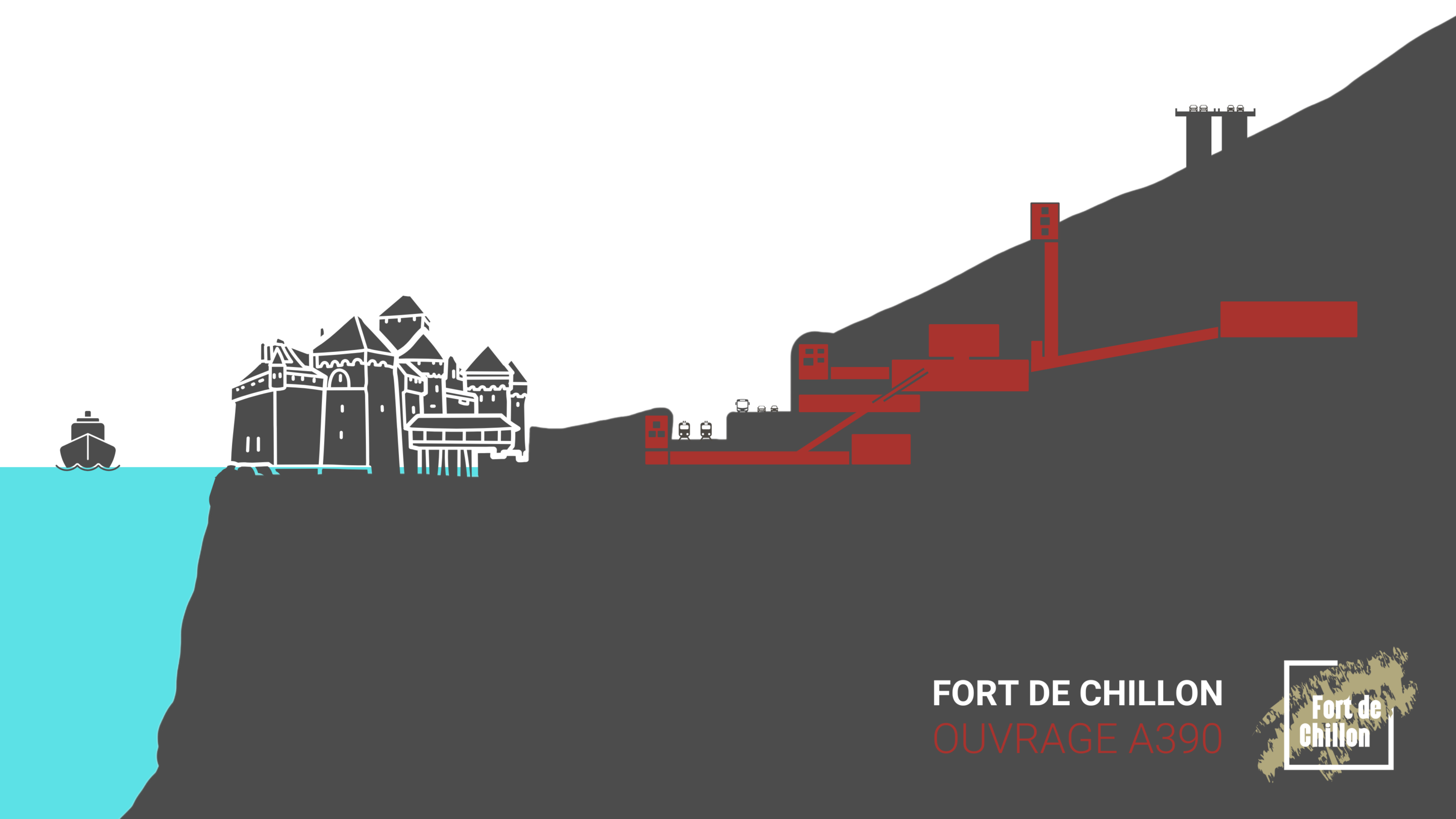
A historic site that bears witness to Swiss military strategy in the 20th century
Origin of Fort Chillon and its companies 1942–1995
Cap Christian Welter
Last commander of Company 55 and Fort Chillon, and member of the Friends of the Fort Chillon Museum
In the 1930s, the threat from the south was a reality for Switzerland. We now know that during their meeting at Brenner, Hitler and Mussolini divided Switzerland between them. In its first version in 1935, the OKW's Tannenbaum plan envisaged a German attack with 15 divisions, while the Italians planned to deploy 30.
On the Grand Saint Bernard route, the distance between the border at the pass and the plateau at the exit from Vevey is 94 km, and 20 km from St Gingolph. In 1941, Switzerland fortified the defences along this route as part of its now famous National Redoubt strategy.
In its final version, the system included, in addition to the troops in the sector and the mined structures, three fortifications: Champex, Comeire and Follatères. Between Martigny and Saint Maurice, two companies each blocked the Rhône Valley.
Next came the Saint Maurice lock and the Chillon gorge.
A Museum of Social Cohesion
Many associations in Switzerland, as well as the three museums of the Stiftung HAM, do admirable work in preserving military equipment. However, the Fort de Chillon Museum is the only museum that honours the Swiss soldiers who agreed to live in extreme conditions to defend their country and its values for over 175 years.
The Fort de Chillon museum is a microcosm of Switzerland
- Of our culture,
- From our linguistic diversity,
- Of the values of duty to our country,
- From our ingenuity and Swiss expertise in all areas,
- Of our ability to collaborate, fraternise and defend ourselves despite our differences.
Cultural actors define us as follows: "A place of memory, identity and social cohesion, offering a comprehensive overview of Switzerland, from its linguistic diversity to its patriotic values, ingenuity and expertise. As an innovative and educational museum, it is a significant addition to Switzerland."

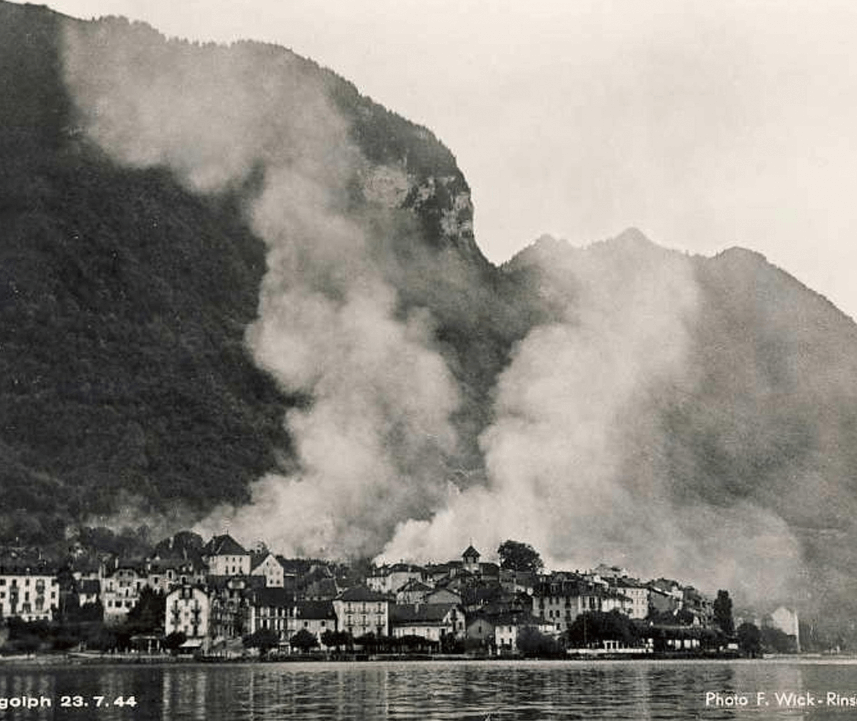
Official commemoration of the 80th anniversary of the fire in Saint-Gingolph, France, attended by officials from Veytaux, Montreux, Saint-Gingolph, the president of the General Henri Guisan Foundation and the Souvenir Français association.